

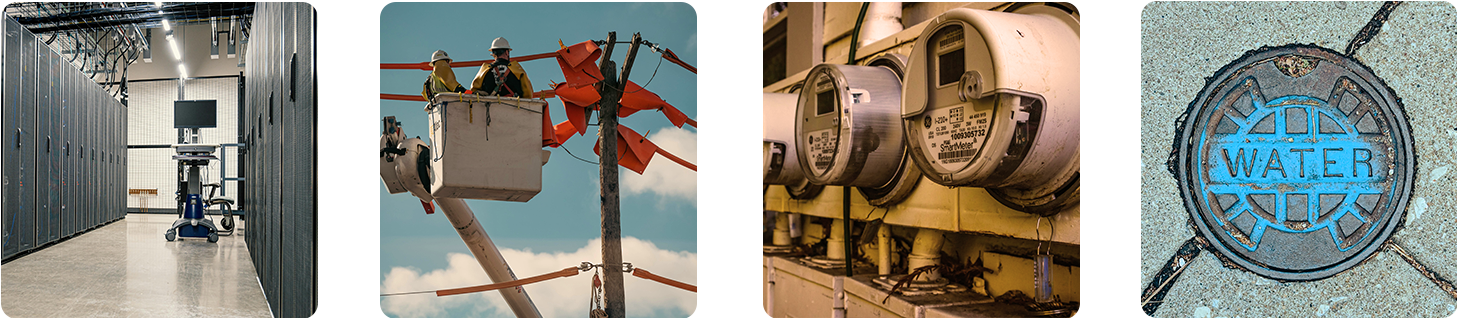
For the energy and utility sector, managing employee leave of absence and job accommodations has become a workforce continuity and compliance challenge that touches operational reliability, safety, and emergency response at every stage. It is one of the industries we serve, where a single unplanned absence can ripple across crews, shifts, and emergency response readiness.
Industry Insights: Energy & Utilities
AI power demand is challenging electric utilities to meet increasing market demand. As such, utilities are expanding their hiring and retention of personnel. This is amplifying the need for sustaining safety and reliability in utility operations and personnel policies to guide the type of culture utilities organizations warrant. HR programs will need to include comprehensive and accurate leave of absence and accommodations management programs as part of the organizations HR Benefits programs for employees. Leave management is increasingly complex with ever-changing requirements at the federal (FMLA), state family leave policies, union relations and company level. Qcera is the premier provider of an all-inclusive leave of absence software and with a team of deep domain experts to help utilities organizations to satisfy both employee and company objectives in this important part of HCM. Qcera LeaveSource provides access to leave of absence software capabilities that supports employees and administers leave experience through ease-of-use, high compliance, and efficient process.
– Calvin Wilbur, Senior Advisor (Energy & Utilities)
In utilities, leave of absence and job accommodations are becoming harder to manage because workforce availability is now more tightly linked to service reliability, safety, and emergency response Utility operations depend on skilled employees in field, plant, line, gas, water, and system-control roles that are difficult to backfill quickly, especially during storms, outage restoration, peak demand periods, and other continuity events. Public power and DOE materials continue to emphasize the sector’s pressure to modernize infrastructure, strengthen resilience, and maintain reliable critical services, all of which increase the operational consequences of employee absences.
There is also evidence that utilities face meaningful underlying drivers of leave volume because so much of the work is physically demanding, safety-sensitive, and operationally critical. Field, plant, line, gas, water, and system-control roles often require employees to work in demanding environments where absences, restrictions, and return-to-work issues can have an immediate effect on staffing and service continuity. More broadly, SHRM reported in 2025 that 57% of employers saw an increase in employee leave requests in 2024, and among those seeing increases, 53% reported increases of 21% or more. While that survey is cross-industry rather than utility-specific, it supports the broader conclusion that leave demand is rising at the same time utilities are managing the workforce strain that comes with operationally critical work.
What makes utilities distinct is the complexity of managing these cases in a reliability-driven environment. HR is not just handling absences It is often balancing FMLA, ADA, PWFA, state leave rules, safety-sensitive job requirements, collective bargaining realities in some organizations, overtime pressure, crew coverage, and emergency response readiness. In utilities, an accommodation or intermittent leave request can affect shift rotations, field deployment, outage response, control room staffing, or compliance with safety rules in ways that are harder to absorb than in a typical office environment. Public power and DOE materials also reinforce that utilities are operating through infrastructure transition, digital transformation, and workforce development pressure at the same time, which makes specialized labor harder to replace quickly.
This is why leave of absence and accommodations software solutions are becoming more compelling for utility HR leaders. The most relevant capabilities include centralized leave and accommodations case management, workflow tools for notices and deadlines, document tracking, intermittent leave tracking, return-to-work and restricted-duty workflows, employee and manager self-service, and integrations with HRIS, payroll, timekeeping, and scheduling systems. In utilities, the business case is less about convenience and more about protecting compliance while giving HR and operations better control over workforce readiness.
The practical takeaway is that in utilities, leave and job accommodations management is increasingly a workforce continuity and compliance capability, not just a back-office HR process. As utilities manage reliability demands, emergency readiness, infrastructure transition, and skilled-labor constraints, the burden of manual leave administration becomes harder to sustain. That is why the need for more modern, technology-enabled leave and accommodations management is becoming more compelling across the sector.
A Message from Our Client
We are very happy to call Qcera a trusted partner. The LeaveSource case management system and MyLeave self-service portal have truly transformed our work by reducing, and in some cases eliminating, many of our manual processes. As a result, our team has more time to focus on providing excellent customer service to our employees and leaders. The Qcera team has been incredibly supportive and responsive to our needs, from our initial kick-off meeting through today—more than 5 ½ years after implementation.
MUNICIPAL UTILITIES DISTRICT
Leave & Accommodations Management in Energy and Utilities
HR teams of utility companies face rising leave and accommodation complexity because workforce availability is directly tied to service reliability, safety, and emergency response. Field, plant, line, and control-room roles are physically demanding and difficult to backfill, especially during outages, peak demand events, or infrastructure transition periods. FMLA, ADA, PWFA, and state leave laws must all be coordinated in an environment where an absence or duty restriction can drastically impact crew coverage, shift rotations, and operational continuity. Purpose-built leave management solutions give utility HR the structure to coordinate these overlapping laws without leaving crew coverage to chance.
How Qcera | LeaveSource® Serves Utility Companies
Qcera | LeaveSource gives utility HR teams a single, automated platform to manage every leave or accommodation case from request to return. Built-in compliance with FMLA, ADA, PWFA, and state leave laws ensures every case is handled consistently and fairly. Automated eligibility assessment, certification tracking, and return-to-work workflows reduce the administrative burden. Seamless integration with HRIS, payroll, and timekeeping systems keeps HR and operations aligned across every shift and location.
To see a full list of LeaveSource’s capabilities view our Platform page.
Why Leave Volume Is Rising in Utilities
The physically demanding work conditions of utility operations result in a steady flow of continuous leave requests, intermittent leave cases, medical restrictions, and ADA accommodation needs that HR must manage carefully and consistently. In an industry where staffing gaps can affect service reliability and public safety, an increase in leave requests creates real operational pressure. For utility HR teams, dedicated leave management software turns that steady stream of continuous, intermittent, and ADA cases into a consistent, trackable workflow instead of a scramble.
The Compliance Complexity Facing Utility HR Teams
What makes utilities challenging is the layered compliance environment. HR is not just applying FMLA rules. Administrators must also coordinate across ADA, PWFA, state leave requirements, workers’ compensation, and in some organizations, collective bargaining agreements that define how leave and modified duty are handled.
An intermittent leave request in a control room role, a restricted duty order for a line technician, or an accommodation request at a power plant can all affect shift rotations, crew coverage, overtime exposure, and emergency response readiness in ways that a spreadsheet or manual process cannot track reliably. For multi-state utility organizations, these challenges multiply because leave laws and policies vary by jurisdiction.
Why Utility Companies Need Leave Management Software
The business case for leave of absence management software in utilities is driven by the need to protect compliance while giving HR and operations better control over workforce availability. The most relevant capabilities for this sector include centralized leave and accommodations case management, intermittent leave tracking, automated notices, deadline notifications, return-to-work and restricted-duty workflows, employee and manager self-service, and integration with HRIS, payroll, and timekeeping systems.
Qcera | LeaveSource® is built for this level of complexity. As the all-in-one leave and accommodations platform, LeaveSource helps utility HR teams manage every type of leave within a single, configurable system that integrates with the HRIS platform your team already uses.
LeaveSource® Enterprise, for large utility organizations that manage leaves internally. Learn more about LeaveSource® Enterprise.
Leave is getting more complex for energy & utility workers.
Qcera | LeaveSource is built to support the needs of Energy & Utilities.
See LeaveSource® in action.